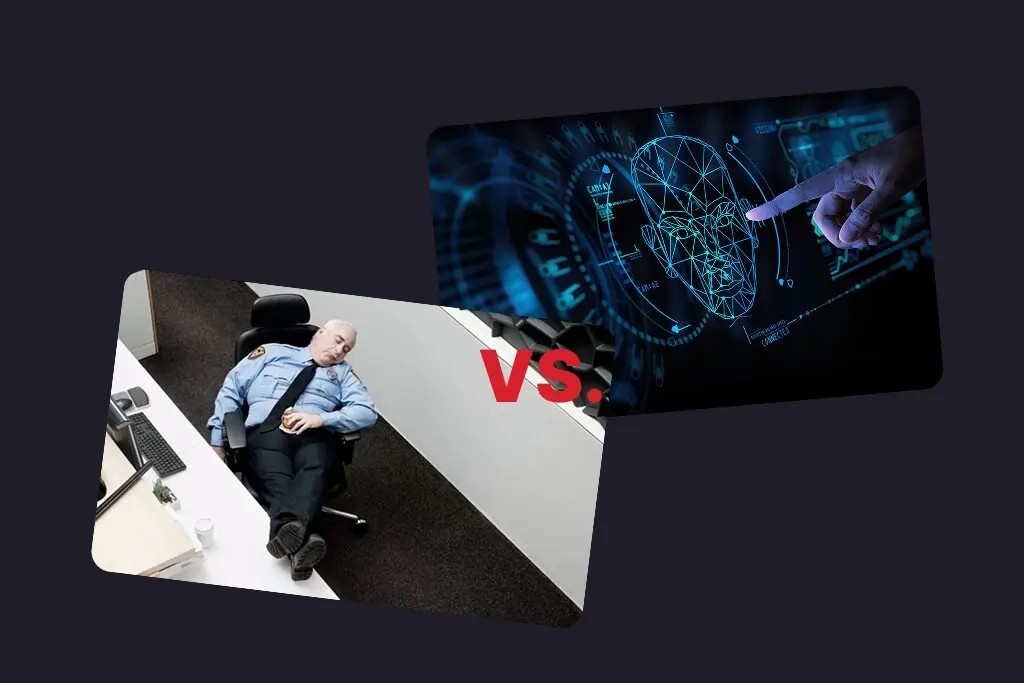
As 2025 draws to a close, businesses across all sectors are meticulously reviewing their operational expenditures and strategically planning for 2026. A critical area often scrutinized is security – a non-negotiable aspect of protecting assets, personnel, and reputation. For years, the debate between traditional manned guarding and advanced remote guarding has been ongoing. However, with technological advancements and evolving economic landscapes, a clear picture of true cost-effectiveness and return on investment (ROI) is emerging.
This year-end analysis delves into a comprehensive comparison, moving beyond initial sticker shock to uncover the hidden costs and tangible benefits that define the superior choice for modern businesses.
The Full Picture: Unpacking the Costs of Manned Guarding
At first glance, the hourly rate of a security guard might seem straightforward. However, a deeper dive reveals a complex web of expenditures that often inflate the “true cost” of human presence.
Direct Costs:
Salaries & Wages: This is the most obvious. However, it’s rarely just the hourly rate. Overtime pay, night shift differentials, and holiday bonuses can significantly increase this figure.
Benefits & Insurance: Health insurance, retirement plans, worker’s compensation, and liability insurance are substantial, mandatory overheads for every employee.
Training & Licensing: Initial and ongoing training, as well as maintaining required licenses and certifications, incur regular costs.
Uniforms & Equipment: Purchase and maintenance of uniforms, communication devices, and other personal equipment.
Hidden & Indirect Costs:
Supervision & Management: The need for supervisors, scheduling managers, and HR support for a security team adds administrative burden and costs.
Turnover & Recruitment: The security industry faces high turnover rates. The cost of recruiting, onboarding, and training new guards (including background checks) is a continuous expense.
Human Error & Fatigue: Guards are human; they can get sick, take breaks, experience fatigue, or be distracted. This introduces vulnerabilities and potential for error, which can lead to costly incidents.
Limited Coverage: A single guard can only be in one place at a time. Securing a large perimeter often requires multiple guards, multiplying all the above costs.
Lack of Documentation: Manual reporting can be inconsistent, making it difficult to analyze incidents and demonstrate compliance effectively.
Key Takeaway: While seemingly reliable, the overall financial footprint of manned guarding is often far greater than just the hourly wage, with many hidden costs that erode potential ROI.
The Future is Now: Understanding Remote Guarding Costs & Unmatched ROI
Remote guarding, leveraging advanced AI, high-definition cameras, and expert human operators, offers a fundamentally different cost structure and a significantly higher ROI.
Transparent & Predictable Costs:
Fixed Monthly Fees: Remote guarding typically operates on predictable monthly or annual contracts, making budgeting straightforward with no hidden overtime, benefits, or recruitment costs.
Technology Investment (Optional/Included): Initial setup might involve camera installation or upgrades, but these are often amortized or included in comprehensive service packages. Modern systems offer clearer images, better analytics, and fewer false alarms.
Scalability: Easily scale your security up or down without hiring or firing staff. Need more coverage? Add more cameras or analytical zones.
Tangible & Superior ROI:
Significant Cost Savings: Studies consistently show that remote guarding can reduce security costs by 30-70% compared to manned guarding, without compromising coverage. These savings go directly to your bottom line.
Proactive Crime Prevention: This is where remote guarding ROI truly shines.
Voice-Down Intervention: OHZ (or similar) operators can issue live audio warnings, often deterring criminals before they cause damage or theft. This prevents loss entirely, rather than just reporting it.
Reduced False Alarms: AI-powered analytics dramatically reduce false alarms, saving you costly fines and ensuring law enforcement resources are utilized effectively.
24/7 Unwavering Vigilance: AI doesn’t get tired, sick, or distracted. Paired with human oversight, it provides consistent, high-level monitoring around the clock.
Enhanced Evidence & Documentation: High-quality video recordings and detailed incident reports provide irrefutable evidence for insurance claims and law enforcement, streamlining processes and maximizing recovery.
Increased Safety: Proactive deterrence protects not only your assets but also your employees and customers from potential harm.
Operational Efficiency: Free up internal resources that would otherwise be spent managing a security team. Focus on your core business while experts manage your security.
Data-Driven Insights: Remote guarding systems collect valuable data on site activity, allowing for strategic placement of cameras, optimization of protocols, and predictive analytics to anticipate future threats. This leads to a continuously improving security posture.
Year-End Comparison: Why 2026 Budgets Favor Remote Guarding
| Feature/Cost Factor | Manned Guarding | Remote Guarding (with AI & Human Verification) |
| Direct Costs | High (Salaries, Benefits, OT, Equipment) | Predictable (Fixed Monthly Fees, often lower overall) |
| Hidden Costs | Significant (Turnover, Training, Management, Fatigue) | Minimal (Managed by service provider) |
| Coverage | Limited by physical presence (1-2 areas max) | Comprehensive (Entire perimeter, multiple entry points 24/7) |
| Proactivity | Reactive (After-the-fact reporting often) | Highly Proactive (Voice-Downs, AI Detection, Live Intervention) |
| Loss Prevention | Reports incidents, may not prevent | Actively Prevents Loss through deterrence and early warning |
| False Alarms | Prone to human error, can be high | Dramatically reduced by AI verification & human confirmation |
| Evidence & Reporting | Varies, often manual, inconsistent | High-quality video, detailed digital reports |
| Scalability | Difficult, costly to add/remove staff | Easy, cost-effective to adjust coverage |
| ROI | Lower (Higher costs, less effective prevention) | Significantly Higher (Lower costs, superior prevention) |
Conclusion: Securing Your Future with Smart Investments
As businesses finalize their budgets for 2026, the choice is clear. While manned guarding has its place in specific, high-risk scenarios, for the vast majority of commercial properties, remote guarding offers a superior, more cost-effective, and ultimately more proactive security solution.
Investing in advanced remote guarding isn’t just about cutting costs; it’s about investing in peace of mind, unparalleled protection, and a demonstrable return on your security investment. Make 2026 the year your security budget works smarter, not just harder.
Ready to explore the true ROI of remote guarding for your business? Contact OHZ Security today for a personalized cost analysis.